








October 2025. I published a piece titled “Is North Africa African?”
The argument was direct: Geography doesn’t create solidarity. The data showed North Africa trading 85%+ with Europe and the Arab world, not sub-Saharan Africa. Libya’s documented slave markets. Tunisia’s anti-Black violence. Algeria’s deportations.
My conclusion: Sub-Saharan Africa should build, assuming limited North African integration. Not from hostility. From realism.
The backlash was immediate.
Adnane Kaab a Morocco-based strategic consultant, responded: “Geography is not just maps. It is history, identity, and shared struggles. The Sahara was never a wall; it was a bridge. True Pan-Africanism is not selective brotherhood.”
Godfred Yemofio pushed back: “North Africa is most certainly African. Naming injustice shouldn’t cause division.”
Maryam Sayagh challenged the framing: “Africa is diverse. Amazigh cultures are African.”
They were right to call me out. I was close to reducing a complex continent to a simple binary. I could see how my framing risked echoing the same divisive narratives I claimed to oppose.
I wrestled with it. Maybe I’d been too harsh. Maybe solidarity required more patience. Maybe the data I leaned on didn’t capture the whole story.
Then, January 19, 2026, happened.
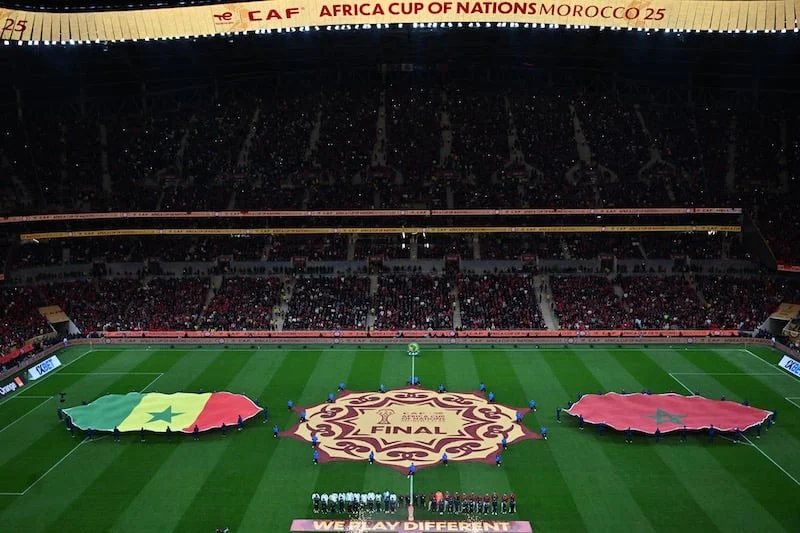
The Africa Cup of Nations final. Rabat, Morocco. Host nation Morocco versus Senegal.
A controversial penalty decision. Senegal’s team walked off the pitch in protest. Morocco’s Brahim Díaz attempted a Panenka straight into Édouard Mendy’s hands. Extra time. Senegal scored. Won 1–0.
The Royal Moroccan Football Federation filed complaints. CAF condemned “unacceptable behaviour.”
But the real story unfolded on social media.
Much of sub-Saharan Africa’s online reaction was unmistakable: jubilation that Senegal had won and palpable relief that Morocco, the North African host, had lost.
In many Moroccan feeds, the dominant emotion was shock. It was the sense that “the rest of Africa” was actively “hating” on them.
This wasn’t about football.
It was the AFCON experiment: put North Africa and sub-Saharan Africa on opposite sides of a high-stakes final like that, you reliase what was at stake was bigger than football.
The result? The gap I’d written about in October wasn’t theoretical anymore. It was visceral. Emotional. Instinctive.
When the stakes were real, the continent split along lines that trade data had already mapped but that Pan-African rhetoric prefers not to see.
Not everyone, of course. There were Moroccans celebrating Senegal and sub-Saharan Africans supporting Morocco. But the dominant pattern online was clear: “their story” versus “our story.”
The critiques of my October piece were fair. I had painted with broad strokes. I had risked feeding division.
But AFCON forced an uncomfortable truth into the open: the identity gap is real. Geography alone doesn’t create solidarity. Neither do AU summits. You can’t coordinate as “us” when, under pressure, your instincts still say “them.”
And that matters. AfCFTA, AU reforms, continental industrial strategies they all quietly assume a baseline feeling of “we” that may not yet exist between North and sub-Saharan Africa.
I needed to understand why. Not from trade data or policy papers. From someone living the Moroccan perspective.
So I reached out to Adnane Kaab. This time I had Five questions. Then I got Five answers that revealed layers I’d missed the first time.
What he told me changed how I see the fracture and what might actually bridge it.
[Part 2: What a Moroccan Strategist Revealed About Africa’s Fracture Lines]
Keep Reading


