








Bashiru Isak was 40. A Ghanaian tailor in Khayelitsha. We may not know whether he made suits, kaftans, batakari, or everyday alterations, but we know what Ghanaian tailors do best: they turn cloth into dignity.
On June 30, Bashiru was shot dead at his shop during anti‑immigrant unrest and bled to death. The killer has not been publicly identified. A man who left Ghana and spent his life fitting clothes to other people’s bodies became another measure of how painfully Africa is tearing itself apart.
On that same fateful day, Ellen Mwamulima, 45, a widow and former domestic worker in Mossel Bay, fled a mob that nearly caught her. She hid in the bush for two weeks. They burned her house and everything she owned. This is present‑day South Africa.
A deeply wounded country and its people are turning unhealed pain into aggression.
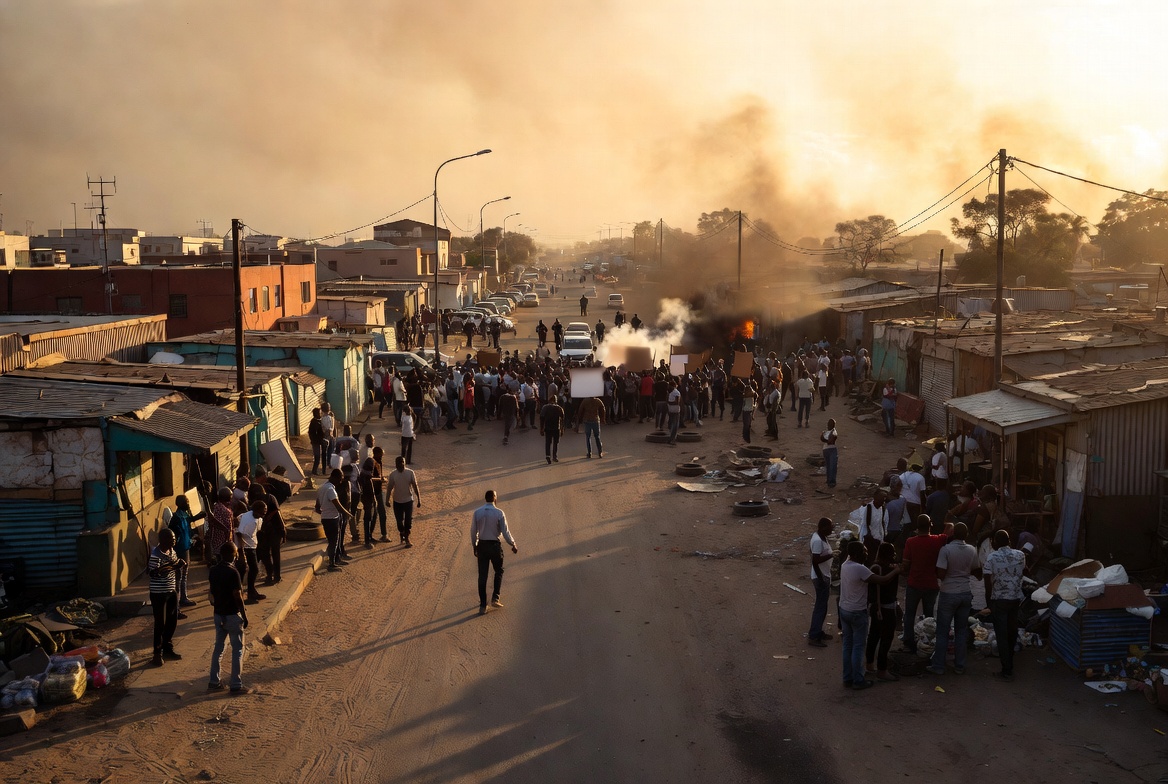
On June 30, 2026, anti‑migrant marches by groups such as March and March, Operation Dudula, and other formations swept Durban, Johannesburg, Pretoria, and Cape Town. Hundreds of arrests. Multiple deaths. Migrants and refugees from Mozambique, Ethiopia, Malawi, Ghana and others were caught in the crossfire.
In Nazareth township, Malawian mother Sayiba John fled with her husband and three children, pulling her daughter out of school mid‑exam. “They said we must go. We have no choice,” she said.
In Johannesburg, Father Idrissah Akilemu returned to Malawi after his house was burned in a night raid. “I realised this was war, not a demonstration,” he said. “Demonstrations happen during the day.”
South Africa has cycled through xenophobic violence in 2008, 2015, 2019, and now 2026. That’s not a country having a bad week. That’s a wound that never closed, reopening on a rhythm roughly every few years, like a fracture that never fully healed.
And this pattern isn’t uniquely South African. Under long‑term economic strain, countries from Latin America to Eastern Europe have all seen anger redirected toward those perceived as outsiders. The wound always finds a way to express itself.
While Germany still funds Holocaust remembrance and education as a permanent national commitment decades after the fact, generation after generation, and Rwanda has built ongoing reconciliation infrastructure since 1994. What happened to the South African Truth and Reconciliation Commission?
Tiger’s Roar: Love as clinical treatment
If we actually believe hurt people hurt other people, then we have to treat South Africa’s pain, not just its protests. Love sounds soft. In this context, it’s clinical.
Four moves, starting now:
- Fund trauma‑informed public health at the township level.
The violence broke out where poverty, exclusion, and untreated trauma run deepest. - Reopen reconciliation institutions.
Rwanda still does this work every year. - Build a Pan‑African rapid‑response network to counter misinformation before it escalates into violence.
The June 30 “deadline” was never official, yet it spread through fake flyers mimicking government notices. Misinformation is a weapon; Africa must fight it. - African embassies show up loudly before the funeral.
Ghana protested fast. That advocacy has to happen while people are still alive to protect, not only once the body is on its way home.
Ubuntu, memory, and global stakes
There’s an Akan proverb: “Obi nkyere abofra Nyame” — no one shows a child God; a child already knows. Some truths don’t need teaching. Trauma has buried South Africa’s understanding of Ubuntu. It’s buried under pain nobody finished treating.
On June 30, South Africa failed Africa, and Africa failed South Africa. Now, will Africa sit with her the way you sit with a family member who is hurting, or are we going to retaliate?
If hurt people hurt other people, then helping South Africa treat its trauma is self‑preservation for all of us.
Tiger Rifkin decodes Africa’s tradition-transformation nexus through fearless analysis. Founder, The Witty Observer.
Keep Reading


