



South Africa’s Xenophobia Is Pan‑Africanism’s Stress Test
I was one of many who took Bob Marley’s “Africa Unite” literally. Now I know enough to understand I have been naive for years.
If we take a critical scan of the continent, we find Arabic in the North. Swahili in the East. Hausa, Yoruba, and Igbo in West Africa. Amharic in the Horn. Zulu, Xhosa, and Sotho in the South. French, English, and Portuguese.
Bantu peoples (Zulu, Xhosa, Shona, Kikuyu) across Southern and Eastern Africa. Cushitic groups (Oromo, Somali) in the Horn. Berbers across North Africa. Fulani spanning the Sahel. Maasai, Tuareg, San, Igbo, and Akan each have distinct identities, histories, and territories.
Islam is dominant in the North and the West. Christianity cuts across Sub-Saharan regions. As we speak theres a resurgence of Traditional spiritual systems.
If you travel in Africa a little, you quickly realise that the continent is not a monolith. Our diversity is extraordinarily beautiful, but those differences also make it heavily difficult to make everyone feel the same about everything. In this context, when I say “unity”, I mean the unrealistic expectation that 55 diverse nations must sacrifice their sovereignty and adopt a single, uniform political and cultural identity to achieve continental progress.
That’s why I say that Africa Unite ” is a beautiful reggae song, but highly impractical. Relax, I am not saying it’s impossible.
If anything, only one Pan‑African ideal is worth fighting for now, and that is forming one serious economic bloc. Cooperation can achieve that; emotional “unity” on its own cannot.
The AfCFTA, the African Continental Free Trade Area, is supposed to fix this by turning the continent into a single market. Nevertheless, chasing a single emotional identity as “Africans” is not necessary.
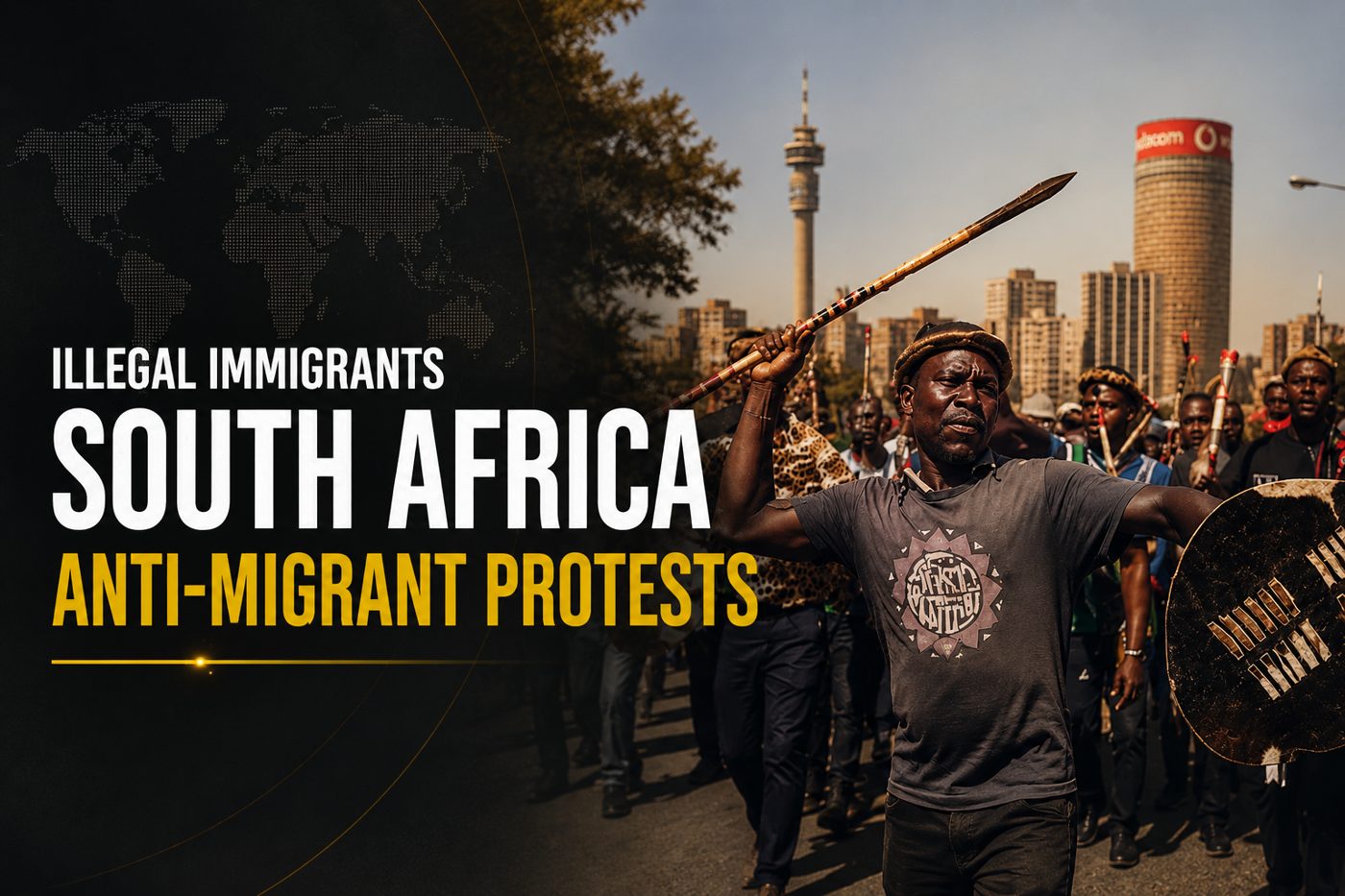
Why? Listen to this. We spent months criticising North Africa after AFCON 2025. Then South Africa reminded us that the so-called unity is an illusion. South Africa’s xenophobia has been well documented since 1994.
But we cant blame South Africa alone. Ghana closed Nigerian shops at one time even expelled them. Nigeria retaliated. Côte d’Ivoire pushed out Burkinabés. Kenya discriminates against Somali citizens. Gabon expelled Central and West African migrants. Tanzania pushed Burundian refugees back home. Zambia scapegoated Zimbabweans. Is that what unity looks like to you in 2026?
Too often, Africans do not trust other Africans. Our unity claims have been largely romantic, aspirational, and academically nauseating.
I don’t enjoy writing about South Africa, because its case is different. South Africans are almost strangers on their own land. The generational trauma is heavy, which means that their actions should be analysed within that context.
7% of white South Africans legally control the bulk of the land; Black South Africans own 4%. The people attacking Ethiopians or Zimbabwean shopkeepers for “taking our country” do not own that country. The colonial impact has traumatised us all as Africans. We are deeply wounded people walking in clean suits, and that residue spills over in forms like xenophobia.
And here is the cruel mockery. “South African giants like MTN, Shoprite, and MultiChoice make billions from other African countries. Yet the average Black South African in a township rarely owns a meaningful stake in these companies. Kwame Nkrumah’s dream is lingering like a ghost with no body to possess, while Bob Marley’s statement is still a great reggae song that has not materialised, almost half a century after he sang it.
Tiger’s Roar
Economic integration requires tolerating other Africans in your space. Right now, we are failing that test.
Every attack is a vote against Pan-Africanism. The Pan-African dream of one people, one government, one identity has to wait. What we need today is something less romantic:
One African market where Ghanaians and Nigerians trade without violence. Where South Africans and Ethiopians coexist. Where crossing a border to do business is normal. The 55 single entities must focus on one economic bloc. Prosperity can have a way of bringing people together.
Tiger Rifkin decodes Africa’s tradition-transformation nexus through fearless analysis. Founder, The Witty Observer.