


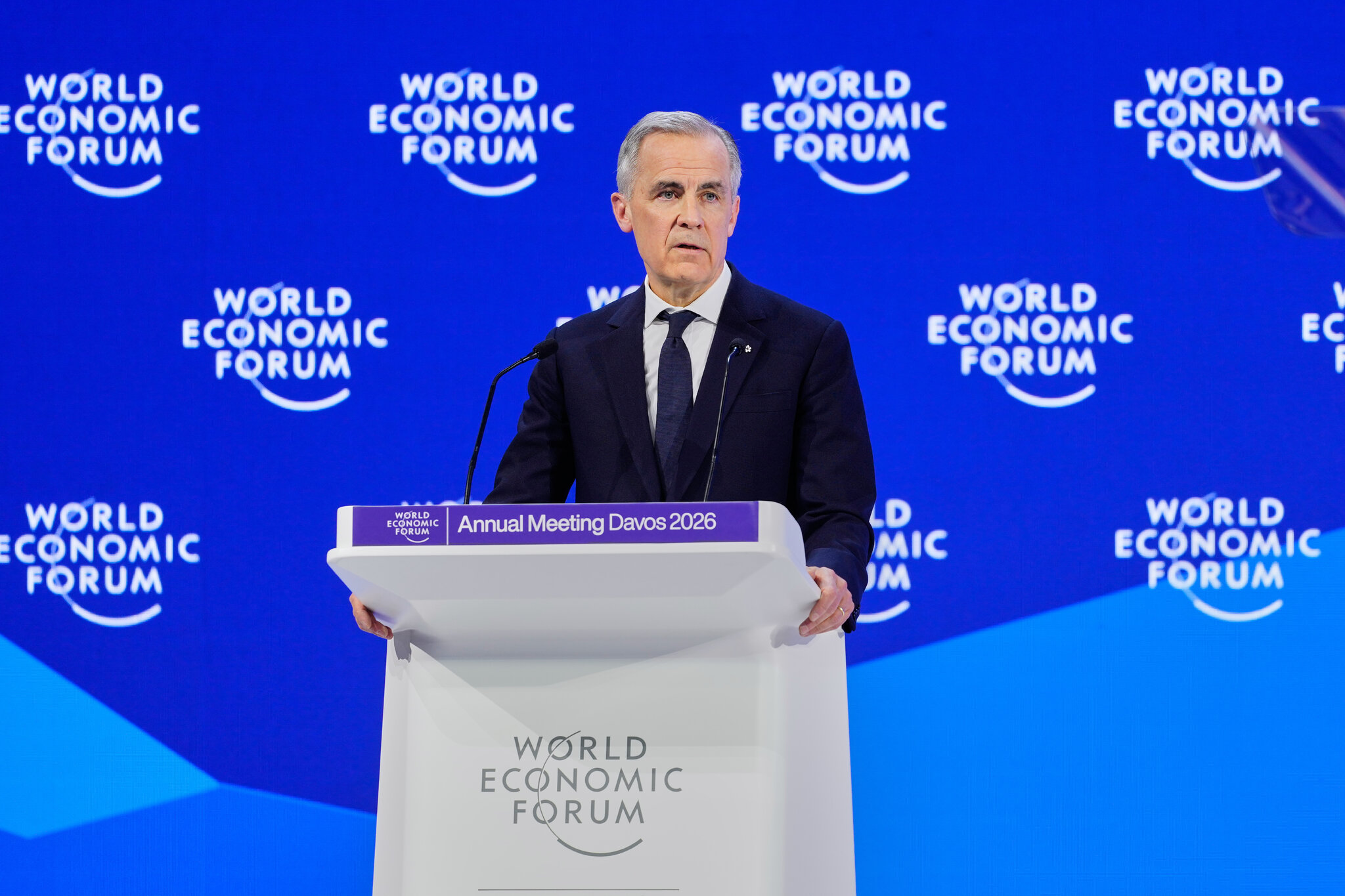

January 20, 2026. Davos. Mark Carney drops the line that matters.
“We’re in a rupture, not a transition.”
Alastair Campbell, Tony Blair’s former communications chief, described Mark Carney’s Davos speech as “real leadership” and one of the most important of recent times.
Canada’s PM argued that the old global order, one that claimed neutrality while rewarding strength, can no longer hold. His warning was blunt: if middle powers fail to coordinate, they will be shaped by others rather than shaping outcomes themselves. They will be on the menu, not at the table.
This matters for Africa more than most people realize. Because the clubs are forming now, and Africa isn’t in formation yet. Africa must actively take on the world as it is, not wait around for a world we wish to be.
The Quiet Reorganization
The rules-based order is fading. Great powers now use trade, finance, technology, and supply chains as instruments of leverage, while middle powers are learning that coordination is the only way to avoid marginalisation. As a result, plurilateral arrangements are multiplying: trade deals that bypass the WTO, selective cooperation on critical minerals, preferred energy and supply-chain partnerships, and closed negotiations on technology standards. These are not inclusive systems. They are clubs with entry rules.
What shifts power is organisation. Africa, therefore, faces a hard reality: it cannot bargain as individual countries in a bloc-based world. In critical minerals, food, energy, and exports, Africa negotiates country by country. The result is predictable: Africa remains a price-taker in a world increasingly run by price-setters.
Tiger’s Roar: Three Non-Negotiables for Membership
In order to scale in this New World Order, Africa must do these 3 things:
1. Form Regional Negotiation
Africa currently negotiates as 54 separate entities, which means 54 separate concessions. By contrast, the G7 does not buy resources as a single buyer. It is governed by a single system. France, Germany, and Canada may sign different contracts at different prices, but those deals operate under the same shared standards (on ESG, trade, finance, and compliance). In practice, that means a supplier cannot undercut one G7 country without risking access to the entire bloc’s markets, financing, insurance, and logistics.
Negotiations are sequenced, not competitive: one country goes first, others follow with knowledge of what was agreed. Shared standards ensure consistency.
Africa already understands this logic, with OPEC’s coordination shaping oil prices, and the East African Community negotiates infrastructure and trade as a bloc. What is missing is extending this same coordination to Africa’s future assets. For example, critical minerals, food systems, and energy corridors, so African countries negotiate separately, but never alone.
2. Value Addition as Non-Negotiable
Countries that shape value chains do not rely on goodwill. For example, Indonesia required nickel to be processed locally as a condition for mining. Today, they shape the global nickel supply chain. Botswana forced De Beers to move key operations to Gaborone and captured far more value from its diamonds. Africa already knows the alternative: the DRC supplies most of the world’s cobalt but processes almost none of it. Cocoa-producing Ivory Coast and Ghana earn only a small fraction of the value in the global chocolate industry. Africa’s resources must come with conditions: local processing capacity, technology transfer, and policies that reward domestic value creation.
3. Standard-Setting Power, Not Compliance
Power in today’s economy is exercised less through prices and more through standards. Whoever writes the rules controls access. European carbon regulations now shape how African manufacturers produce. Meanwhile, digital and technology standards are largely set in Brussels, Washington, and Beijing. African countries mostly comply with these frameworks. Collective African positions through the African Union, continent-wide digital standards, and the AfCFTA’s 1.4-billion-person market can all be used to shape rules. Africa should not be merely absorbing rules created by others.
What Carney’s Moment Signals
The global order is no longer governed by universal referees. It is being shaped by blocs. The old tools Africa still banks on are fading. The hypocrisy shows that moral appeals carry less weight, global institutions enforce less consistently, and individual bargaining power has weakened. This is why Carney’s warning matters now: new tools, regional coordination, mandatory processing requirements, participation in setting standards, and strategic control over key resources.
Carney’s message was clear: stop appealing to fairness, it’s over. In this environment, membership is earned through coordination.
The choice for Africa is becoming urgent. If the continent enters this era divided, contracts will continue to be negotiated separately, processing will remain offshore, and standards will be imposed from the outside.
If Africa enters as a coordinated bloc, negotiations happen collectively, value addition is enforced locally, and standards are shaped around African priorities. That is how a continent becomes a swing actor. The clubs are forming now.
As the proverb reminds us, if you want to go fast, go alone, but if you want to go far, go together. The clubs are going far. The question is whether Africa joins them.
Tiger Rifkin is a Pan-African analyst and founder of The Witty Observer, decoding Africa’s tradition-transformation nexus through fearless, data-driven analysis that bridges Western policy circles and African realities.