



When we look at Africa, we want to see you…. first. This is why what happens to you has a rippling effect on all of us. You are our largest population, our biggest democracy, and you are our largest economy, NOT Egypt, NOT South Africa, let the economist say what they want, BUT you are the undisputed GIANT. You are our cultural Superpower and our biggest influence in the diaspora.
You need to start behaving like an adult. Granted, your challenges have colonial roots, yes, the 1804 Fulani jihad, but you can’t keep blaming the problem.
India has 1.4 billion people, it’s working through its mess, so is Indonesia with 280 million and Brazil.
You need to play the hand you have been dealt and rise from the ashes like the phoenix and lead that great continent to greatness. No more excuses, get your shit together.
Nigeria says it isn’t genocide. Survivors say they don’t know what else to call it.
This is not 1984; we all see the bodies pile up on our phone screens. The explanations multiply. The silence is ear-shattering.
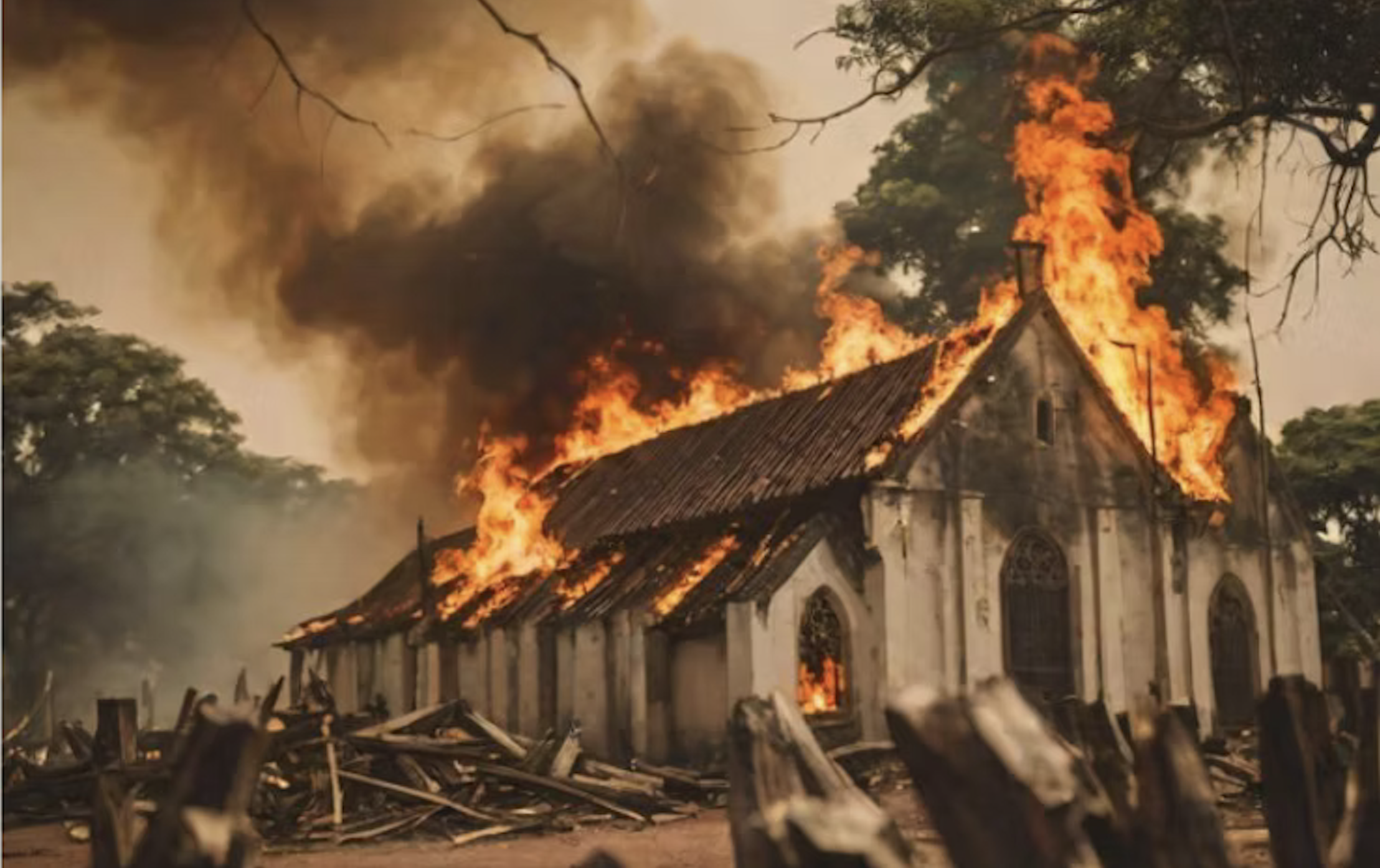
On November 22, 2025, attackers stormed St. Mary’s Catholic School in northern Nigeria. Children killed. Teachers abducted. Local clergy report several teenage girls were abducted. Days earlier, footage circulating online shows an elderly woman on crutches fleeing a parish church as gunfire cracked behind her. She moved slowly. Alone.
Plateau State. Benue. Kaduna. Taraba. The pattern repeats: communities attacked at night, homes burned, we are watching families scattered live.
Some of us know this is NOT new. But the scale, frequency, and targeting raise questions Nigeria refuses to answer.
A Short History of a Long Wound
Before 1804, northern Nigeria was a web of Hausa kingdoms, Nupe states, Jukun polities, and Middle Belt communities, each with its own rulers, religions, and political systems.
Then the Fulani Jihad led by Usman dan Fodio changed everything.
What did the Jihad actually do? It didn’t erase Hausa people. It erased Hausa kingship.
Most Hausa rulers were overthrown or forced to flee.
Fulani emirs replaced them, installed as governors of a new Sokoto Caliphate.
Communities that resisted, especially in the Middle Belt, retreated into hills and forests, preserving their autonomy.
The entire political landscape of the region was rewritten: independent kingdoms turned into emirates governed from Sokoto, while local identities persisted under new authority.
Then came the good ol G, Britain.
Colonial administrators froze these old tensions into a rigid political structure, elevated some groups above others, drew borders that ignored centuries of conflict, and handed independence to a state built on unresolved fractures.
The Fulani Emirs sit on thrones, the old Hausa kings lost 200 years ago, but today’s violence is no longer a Hausa-Fulani battle for rulership; it’s a multi-layered crisis of land, religion, history, and a state that no longer controls its own territory.
And now, under pressure, it’s cracking again.
The Five Explanations Nobody Can Agree On
Resource conflict? Desertification is real (UNEP confirms it). Herders move south. Land becomes contested. But resource conflict doesn’t explain girls abducted from schools or attackers burning churches.
Religious targeting? Catholic parishes burned. Christian villages are repeatedly hit. Clergy reporting funerals weekly. But government statements insist “religion has no role.”
Ethnic cleansing? Amnesty International and Human Rights Watch document patterns of specific ethnic communities repeatedly targeted across states. But officials avoid the phrase entirely.
State weakness? Police underfunded. Military overstretched. Response times are painfully slow. This alone cannot explain coordinated, multi-state attacks.
Political networks? Election cycles correlate with spikes in violence (International Crisis Group). Armed groups exploited by elites? Possibly. Criminal gangs capitalizing on chaos? Likely.
What if all these explanations are true and piled on top of each other? What if today’s killings are the modern expression of old fault lines that colonial borders never resolved?
The Human Cost
A mother in Plateau State is still searching for her seventeen-year-old daughter, who was taken during the school attack.
A parish priest is burying members of a family he baptized.
The elderly woman in that viral video is someone’s grandmother hobbling away from gunfire.
This isn’t analysis. It’s grief carved into geography.
The Geopolitical Stakes
Nigeria is Africa’s largest democracy and economy. If Nigeria cannot secure its rural communities, what does ECOWAS stability even mean?
When entire villages vanish from maps, how long can West Africa pretend this is a “local problem”?
And if the world can watch these killings for years without naming them, what does that say about global thresholds for African suffering?
The Question the Government Cannot Escape
The UN Genocide Convention requires proof of intent. Nigeria denies such intent. But intent does not erase patterns.
So if coordinated attacks on specific communities across multiple states, thousands dead, churches burned, girls abducted, still don’t qualify, what level of killing finally earns a name?
And if these patterns trace back centuries, how long will we pretend this is about cattle and farmland?
Tiger Rifkin is a Pan-African geopolitical analyst and founder of The Witty Observer, decoding Africa’s tradition-transformation nexus through fearless analysis that demands accountability from all governments.